Most knitters own both types of needles, and most reach for a favourite without thinking about it. That works well until the favourite stops being the right tool. A 150 cm blanket on 35 cm straight needles turns into a wrestling match, and a sock on a long circular needle needs a technique you have to learn first. Neither needle is superior. The choice comes down to three practical things: the shape of the project, how your hands and shoulders feel after two hours, and whether the thing has to travel with you.
Straight needles are two rigid sticks, usually 25 to 35 cm long, with a point at one end and a cap at the other. Your stitches sit on one needle while you work them onto the other, and the growing fabric hangs from the right-hand needle or rests in your lap.
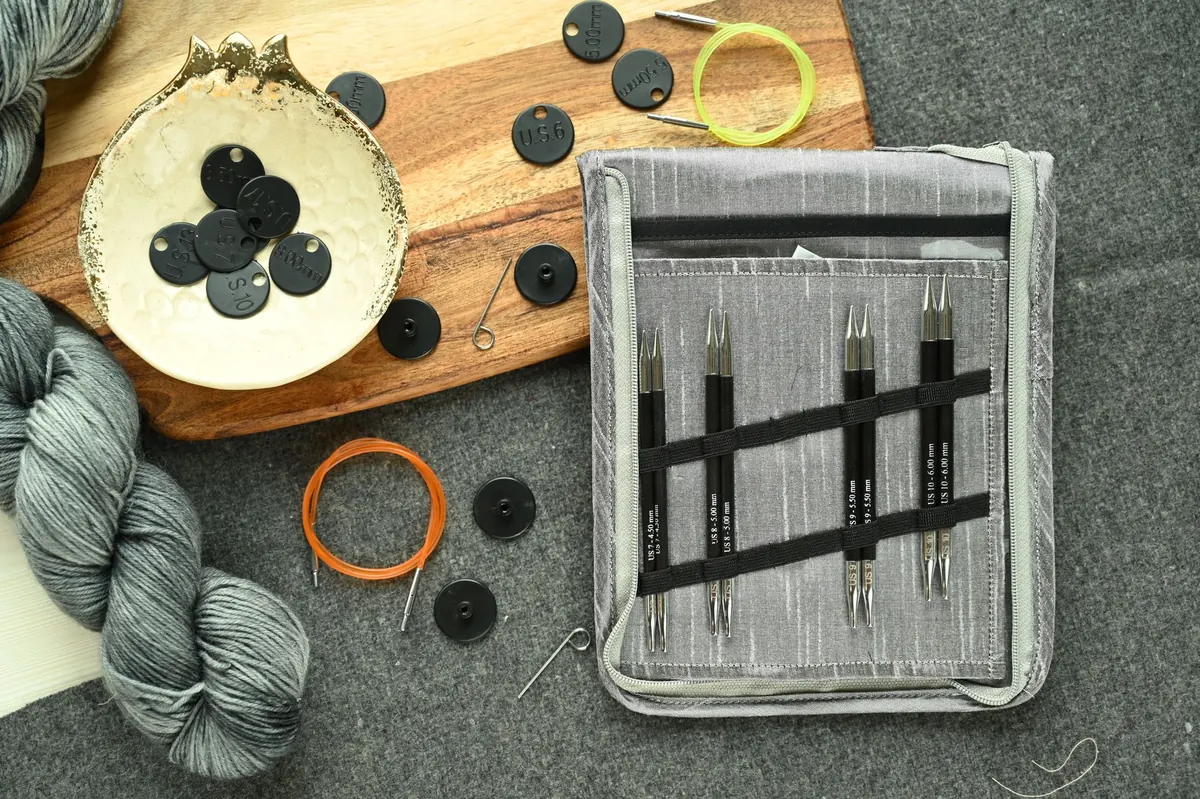
Circular needles are two short tips joined by a flexible cable. They are sold as a single unit, and the size printed on the packet refers to the needle diameter, not the cable. You can knit flat with them by turning your work at the end of every row, exactly as you would on straights, or you can join the stitches into a ring and knit in the round. Once you are comfortable with them, a single circular pair can handle most of the knitting you will ever do.
A circular needle's overall length is measured tip to tip, cable included: 40 cm, 60 cm, 80 cm, 100 cm and longer are common. The working rule that saves the most frustration is to choose a cable shorter than the circumference of your knitting. If the cable is longer than the loop of stitches, the fabric has to stretch to reach around it, and your tension drifts. For a hat, 40 cm is the usual starting point. For an adult sweater body, 60 to 80 cm. For a blanket worked flat, go long — 100 cm or more — so the fabric can spread out and rest instead of bunching.
Interchangeable sets, where the tips screw onto different cables, are worth considering once you know you will knit regularly. They cost more up front than a single pair, but they let you change both tip size and cable length without buying a new needle each time.
Scarves, sweater backs and fronts, blanket squares, dishcloths: anything worked back and forth can be made on either type. This is where personal preference genuinely wins. Many knitters use circulars for flat knitting simply because the weight of the fabric settles into their lap instead of hanging off one wrist.
Hats, cowls, sweater bodies, sock legs, mittens: these need circular needles, double-pointed needles, or both. Two straight needles cannot be joined into a ring. If you plan to knit garments without seams, circulars are not optional.
Sleeve cuffs, hat crowns, sock heels and thumbs are the awkward part. You have three options: a set of double-pointed needles, a short circular with short tips (often sold for socks and hats), or the magic loop method, where you use one long cable — 80 cm or 100 cm — and pull a loop of cable out at the halfway point so the stitches can travel around. Magic loop takes one evening of practice and then removes the need to own double-pointed needles in every size.
This is where straight needles struggle most. A blanket 150 cm across, pushed onto two 35 cm needles, puts a lot of weight far from your hands and forces you to shove stitches along the shaft with every row. A long circular holds the same number of stitches with the bulk of the fabric resting on the cable. If you like big, cosy projects, this alone justifies the switch.
The difference shows up after an hour, not in the first row. On straight needles, the knitted fabric hangs from the right needle, and a heavy project pulls that wrist into an awkward angle. On circulars, the cable carries the weight and the fabric sits in your lap or on the table in front of you.
Two details shape comfort more than knitters expect:
Needle material matters too, though it is a separate question from shape. Metal tips are slippery and fast; wood and bamboo grip the yarn. If you switch from one to the other mid-project, check your gauge again on a swatch, because your tension can shift with the surface.
One sensible note: if knitting produces numbness, tingling or persistent pain in your hands, wrists or shoulders, stop and get advice from a health professional rather than knitting through it. Changing needle type can help, but it is not a substitute for proper assessment.
Circulars win this category easily. It is one object instead of two, so there is no second needle to lose down the side of a sofa or leave in a hotel room. You can push your stitches onto the cable and pull the tips together, which keeps everything contained in a project bag. Nothing long and pointed is sticking out of your handbag.
Straight needles are fine for a small project at home, but a 35 cm needle in a crowded train seat is a hazard to the person beside you. If you fly, check your airline's current rules on knitting needles before you pack, and consider carrying a circular rather than long straights — the same advice applies to trains and coaches where space is tight.
A small habit worth adopting: keep a couple of point protectors or a cable cap in your bag. They stop stitches sliding off when a project gets shoved into a rucksack.
Plenty of experienced knitters keep straights in regular use, and not out of nostalgia.
There is no rule that says you must convert. What matters is choosing deliberately rather than out of habit.
If you are building a collection, you do not need everything at once. Start with a small set that handles the projects you actually knit, and add as you go.
Store circulars loosely coiled rather than wound tight around the tips; the cable keeps its shape better. Keep each project's needle with the project, and note the needle size and cable length on the pattern. Two years from now, when you return to a half-finished sleeve, that note will be the difference between continuing and guessing.
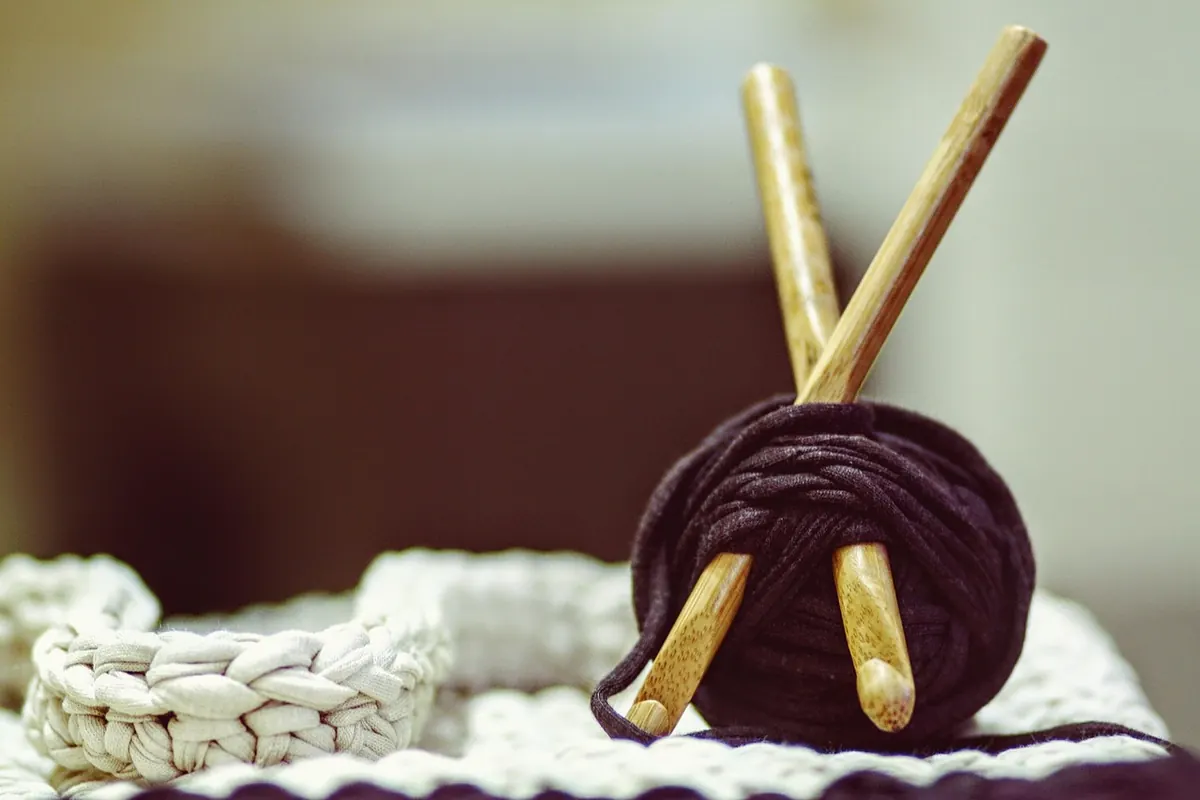
Photo: Knitting Needles / Pexels
A beginner-friendly, step-by-step guide to sewing a lined tote bag, from choosing fabric and cutting panels to...
A practical pre-start guide to crochet gauge, hook sizing, and yarn preparation, with a checklist to help you avoid...
A practical guide to buying wool across Italy: the wool districts worth visiting, the fairs worth planning around,...

Patient threads for handmade textile crafts.
